The Best AI for Building Full-Stack Apps (2026): 8 Builders Scored on the Backend, Not the Demo
Every AI app builder calls itself full-stack. We checked what each one actually ships below the screen - database, sign-in, server logic, payments, hosting, and code you can take away - scored 8 of them out of 60, and checked every price on the vendor's own page on 29 September 2026.
TL;DR
Blink is the best AI for building full-stack apps in 2026, scoring 59 out of 60 and winning all six criteria: one prompt gives you a SQL database, sign-in with roles, Stripe payments, hosting on your own domain, and a GitHub repo you own, with no second service to connect. Replit (45) is the strongest pick for developers who want an IDE, Base44 (43) covers simple CRUD apps, and Lovable (40) builds polished front ends on a backend billed from separate Cloud credits. v0 (29) is a front-end generator: the backend is yours to build.
"Full-stack" has become the default claim on every AI app builder's homepage, and it hides the only question that matters: what's behind the screen once you stop looking at the demo? A full-stack app has five layers - a database that survives a refresh, accounts people can sign into, server logic that runs when nobody's looking, payments, and a live address - and you should be able to take the code with you. We gave 8 builders the same brief (a paid membership app with sign-up, a member directory, Stripe subscriptions, an admin dashboard, and a weekly email digest) and scored what each one delivered from the prompt.
The short answer: which AI builds full-stack apps best?
| If you're building... | Use | Why |
|---|---|---|
| A full-stack app with no backend to assemble | Blink | SQL database, sign-in, storage, hosting, and payments come with the project, so there's no Supabase, Clerk, or Vercel account to connect |
| A paid product with subscriptions | Blink | Plans in your own Stripe account, checkout, webhooks, and a customer portal from a description |
| An app with admin and member roles | Blink | Role-based access and row-level security are part of the built-in sign-in |
| A full-stack web app that also needs a phone app | Blink | The same project ships to the web, iOS, and Android against one database |
| A codebase a developer will take over | Blink | Two-way GitHub sync on every plan, including Free |
| A developer environment with an AI agent inside | Replit | If you want to work in an IDE yourself and accept usage-based billing |
| Only a React front end for an existing backend | v0 | Clean Next.js UI, with the database and sign-in left to you |
Is the backend in the box? The test that sorts every builder
One yes/no question separates real full-stack builders from front-end generators: when the first prompt finishes, does the app already have a database, sign-in, and a live address, without you creating an account anywhere else? Blink, Base44, Replit, Emergent, Anything, and Bolt say yes. Lovable says yes through Lovable Cloud, which is billed from its own credit balance. v0 says no: it generates the interface and expects you to bring the database and authentication. The second question is server logic - code that runs on a schedule or when Stripe sends a webhook - because that's where most "full-stack" demos stop.
| Builder | Database built in | Sign-in and roles | Server logic (webhooks, jobs) | Hosting + custom domain | Code you own |
|---|---|---|---|---|---|
| Blink | Yes - SQL per app | Yes - email, Google, Apple, roles, row-level security | Yes - webhooks, scheduled jobs, queue | Yes - Starter | Yes - GitHub sync on every plan |
| Replit | Yes - PostgreSQL | Yes - Replit Auth or Clerk | Yes - you write it in the IDE | Yes - Core | Yes |
| Base44 | Yes | Yes | Partial - backend functions from Builder | Yes - Builder | Partial - GitHub from Builder |
| Lovable | Partial - Lovable Cloud credits | Yes | Partial - edge functions | Yes - Pro | Yes - GitHub |
| Emergent | Yes | Yes | Partial - via agent prompts | Yes - Standard | Yes - GitHub on Standard |
| Bolt | Yes - Bolt Cloud | Partial - needs fixes | Partial | Yes - Pro | Yes |
| Anything | Yes | Yes | Partial | Yes - Pro | Partial - paid plans |
| v0 | No - bring your own | No - bring your own | Partial - Next.js routes you wire up | Yes - Vercel | Yes |
How we scored this
Each tool was scored 0-10 on six criteria, for a maximum of 60. A 10 means that layer of the brief worked from the prompt, inside the product, with no second service and no manual wiring. Every point below 10 is a specific gap: a service you have to sign up for, a plan upgrade, or a step we had to finish by hand.
| Tool | Database + auth | Server logic | Payments | Deploy + hosting | Code ownership | Real cost | Total |
|---|---|---|---|---|---|---|---|
| Blink | 10 | 10 | 10 | 10 | 10 | 9 | 59/60 |
| Replit | 8 | 8 | 6 | 9 | 9 | 5 | 45/60 |
| Base44 | 9 | 7 | 6 | 8 | 5 | 8 | 43/60 |
| Lovable | 7 | 6 | 6 | 7 | 8 | 6 | 40/60 |
| Emergent | 8 | 7 | 5 | 7 | 7 | 3 | 37/60 |
| Bolt | 7 | 6 | 4 | 7 | 8 | 4 | 36/60 |
| Anything | 7 | 6 | 5 | 7 | 4 | 5 | 34/60 |
| v0 | 2 | 5 | 2 | 7 | 8 | 5 | 29/60 |
The criteria we tested on
Database + auth
A real database that persists between sessions and sign-in with roles, created by the builder from the prompt rather than connected from another provider.
Server logic
Code that runs on the server: webhooks from Stripe, scheduled jobs like the weekly digest, secret API keys, and email from your own domain.
Payments
Stripe subscriptions with checkout, webhooks, and a customer portal set up from a request, plus in-app purchases where the app runs on phones.
Deploy + hosting
A live, production URL with SSL on your own domain, without exporting to a separate host.
Code ownership
Whether the full stack, frontend and backend, can be synced or exported and run somewhere else, and on which plan.
Real cost
The all-in monthly cost to run the brief in production, including separate backend bills, usage charges, and per-seat pricing.
Tool-by-tool reviews
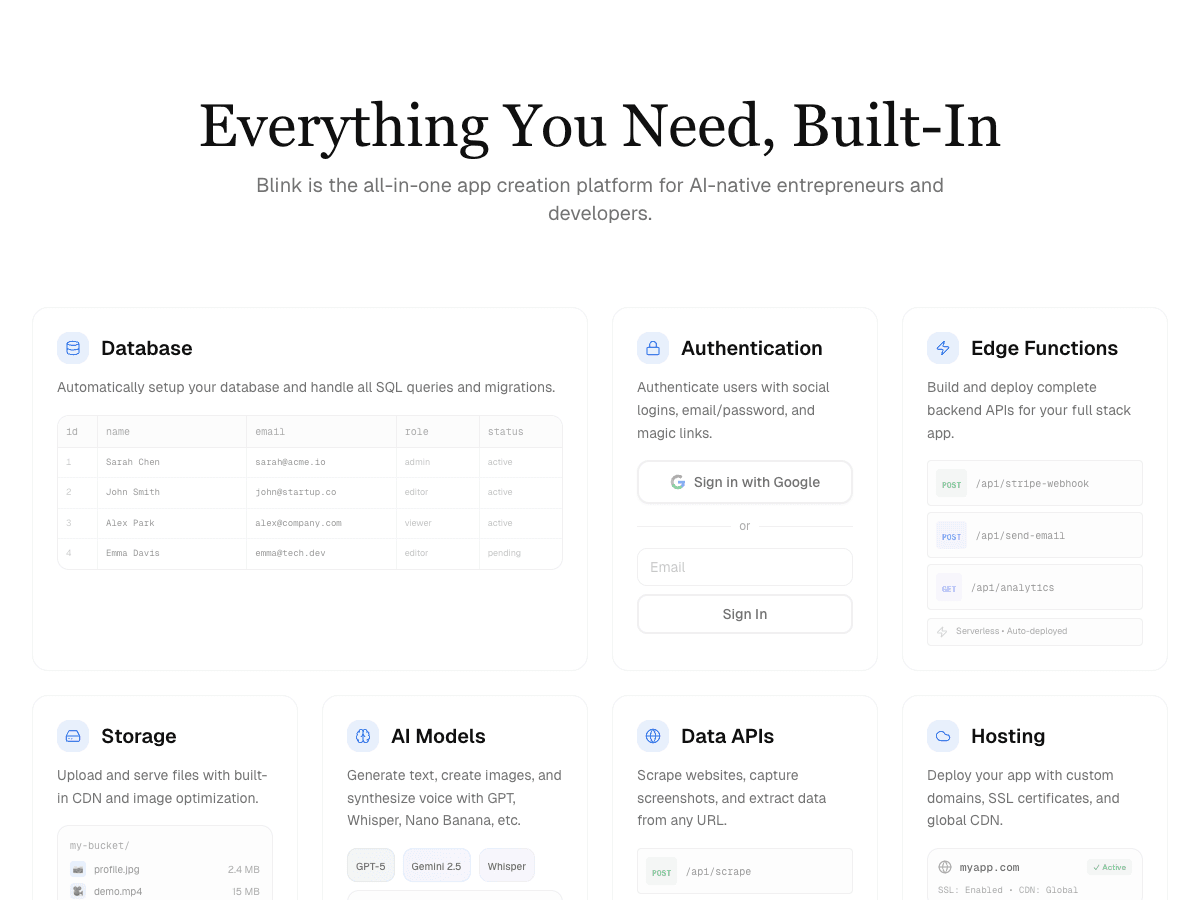
Blink
Best overall: full-stack apps with nothing to assemble
Free plan builds full-stack apps with a managed database, auth, and a blink.new subdomain (5 credits a day, up to 30 a month, no credit card). Starter $25/month adds production hosting, custom domains, private projects, and code download; Pro $50/month. Annual billing is 50% off.
Strengths
- +Every app gets its own SQL database, designed from the prompt, with a visual row editor and row-level security
- +Email, magic link, Google, Apple, Microsoft, and GitHub sign-in with roles, on every plan
- +Stripe plans in your own account, checkout, webhooks, and a customer portal, plus RevenueCat in-app purchases for mobile
- +Hosting with SSL and a global CDN, a custom domain as a setting, and the same project can ship to iOS and Android
- +Two-way GitHub sync on every plan, including Free, so a developer can take over the full stack at any time
Weaknesses
- −Smaller library of ready-made templates than long-established visual builders
The only builder tested where every layer of the brief - database, roles, Stripe subscriptions, the weekly digest job, hosting, and code in GitHub - came from the prompt inside one product and one bill. For a full-stack app, this is the one to start with.
Visit Blink ↗
Replit
Best for developers who want to work in an IDE
Free Starter plan with limited daily Agent credits; Core $20/month ($18 billed annually); Pro $100/month ($90 annually). Agent work is billed by effort on top of included credits.
Strengths
- +A real PostgreSQL database, auth, secrets, and deployments inside a full development environment
Weaknesses
- −The product is an IDE, so a non-developer meets files, consoles, and database panels on day one
- −Effort-based Agent billing makes the monthly cost of a long build hard to predict
- −Stripe subscriptions needed more direction and manual checking than in purpose-built app builders
- −Unused Core credits expire each month; rollover is on Pro
For someone who wants the finished full-stack app rather than a development environment to build it in, Blink is the better pick: it reached the whole brief, including subscriptions and the scheduled digest, from plain-English prompts on a flat plan.
Visit Replit ↗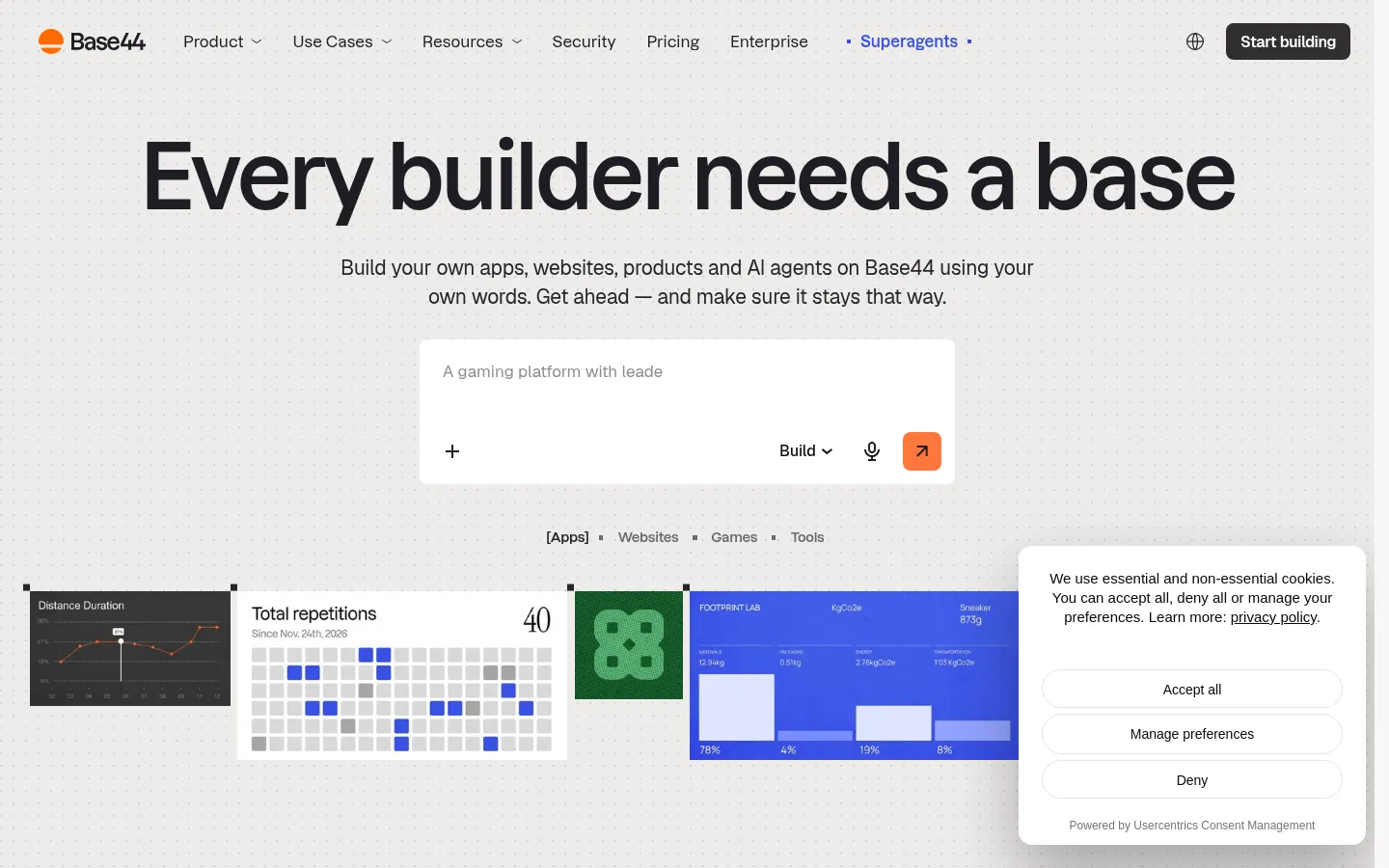
Base44
Best for simple CRUD apps inside the Wix ecosystem
Free (25 message credits a month); Starter $16/month, Builder $40/month, Pro $80/month, Elite $160/month, all billed annually (20% off monthly billing).
Strengths
- +Database, sign-in, and hosting are included on every plan, including Free
Weaknesses
- −Backend functions and custom domains start on the $40/month Builder plan
- −GitHub sync starts on Builder, and backend calls go through Base44's own SDK, so leaving means rewriting them
- −Message credits and integration credits are separate balances, which makes the bill harder to forecast
- −Its mobile apps wrap the web app in a web view and can't sell digital subscriptions in-app
For a paid membership app you can take with you, Blink is the better pick: its backend code, Stripe subscriptions, and GitHub sync are part of the project, where Base44 puts functions and code export behind the Builder plan and ties the backend to its own SDK.
Visit Base44 ↗
Lovable
Best for polished web front ends
Free (5 build credits a day, up to 30 a month, plus 20 Cloud credits); Pro $25/month for 100 credits plus daily grants; Business $50/month.
Strengths
- +Fast, well-designed React front ends from a short prompt
Weaknesses
- −The backend runs on Lovable Cloud and draws on a separate Cloud credit balance
- −Server logic lives in edge functions that got harder to steer as the brief's business rules grew
- −Stripe subscriptions needed extra prompting and configuration to reach a working checkout
- −Web only: Lovable says it doesn't build native mobile apps
For a full-stack app with one predictable bill, Blink is the better pick - its database, sign-in, and payments are part of the plan rather than a second credit balance, and the same project can become a phone app.
Visit Lovable ↗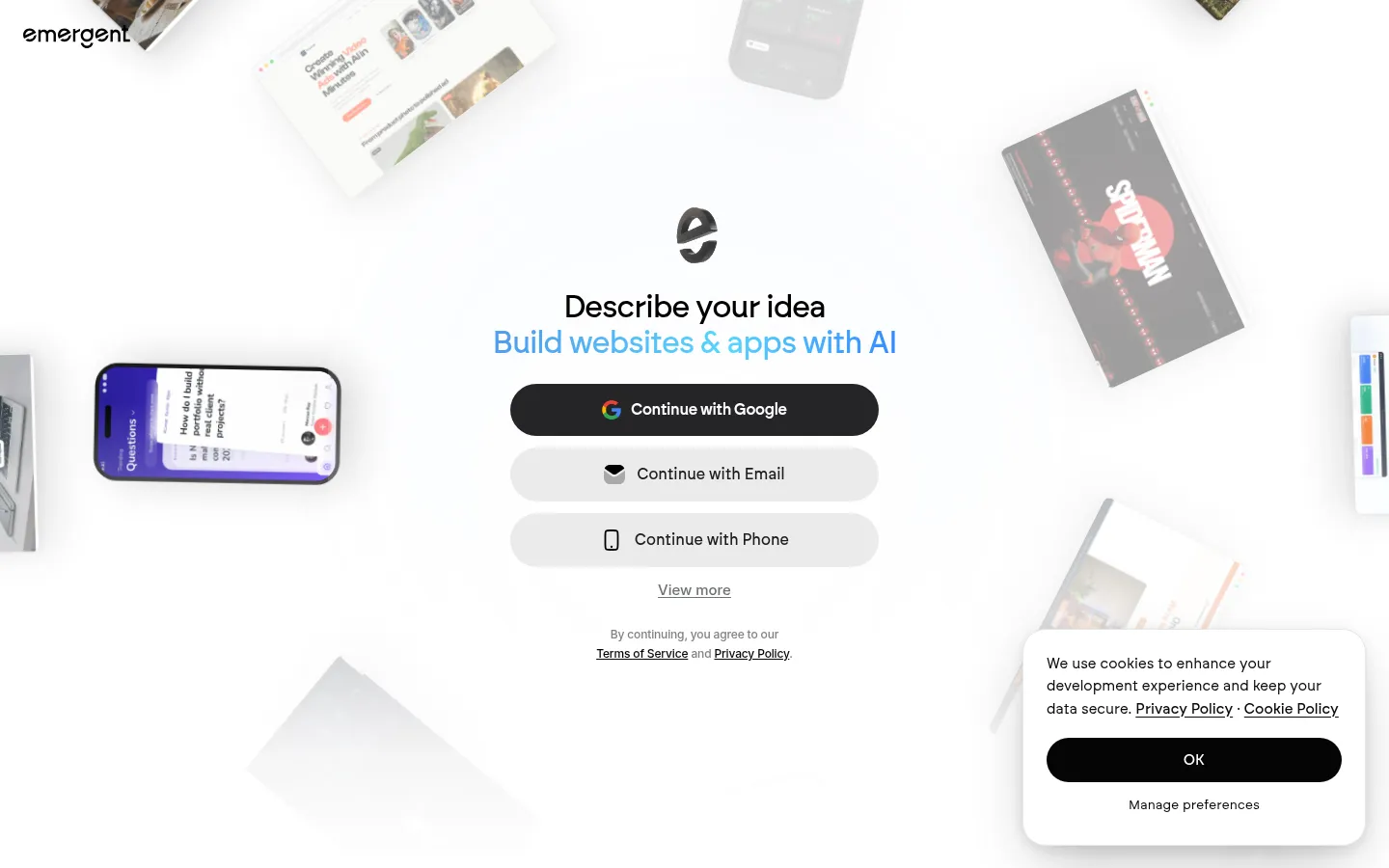
Emergent
Best for long agent-driven build sessions
Free (10 credits a month); Standard $20/month ($17 billed annually) for 100 credits and GitHub; Pro $200/month ($167 annually) for 750 credits.
Strengths
- +Multi-agent builds that plan, code, and deploy long tasks with little supervision
Weaknesses
- −100 credits on Standard go quickly on a full-stack brief, and the next tier is $200/month
- −Credit use varies by task, so one long backend session can drain much of a month's allowance
- −Payments came through an integration step rather than the first prompt
- −Team roles and shared workspaces sit on custom Business pricing
For a full-stack app a small team can build without a jump to $200 a month, Blink is the better pick - it ships a SQL database, Stripe, and unlimited workspace members on every plan.
Visit Emergent ↗
Bolt
Best for developers prototyping in the browser
Free (1M tokens a month, 300K a day); Pro $25/month from 10M tokens with custom domains; Teams $30/member/month.
Strengths
- +Bolt Cloud includes hosting and databases, and you get the full source code on every plan
Weaknesses
- −Sign-in and roles needed hands-on fixes after the first generation
- −Token pricing burns fast in debugging loops, so a full-stack brief gets expensive
- −Stripe subscriptions and the scheduled digest weren't set up from the prompt
- −Teams pricing is per member
For a non-developer who needs the backend finished rather than started, Blink is the better pick: it reached working roles, subscriptions, and the scheduled job without token-burning fix loops.
Visit Bolt ↗
Anything
Best for a large monthly credit allowance
Free tier; Pro $19/month billed annually for 20,000 credits, with private projects and custom domains; Max $199/month for 220,000 credits.
Strengths
- +Large monthly credit allowances compared with most tools tested
Weaknesses
- −Custom domains and private projects need a paid plan
- −Code export is limited to paid plans
- −Credit costs vary by task, so the real monthly bill is hard to forecast
- −Payments come through integrations rather than a built-in Stripe setup
For a full-stack app whose code you own from the first day, Blink is the better pick: GitHub sync is free, and Stripe subscriptions come from the prompt.
Visit Anything ↗
v0
Best for React UI drafts
Free with $5 of monthly credits and a 7-message daily limit; Plus $30/user/month; Business $100/user/month.
Strengths
- +Clean React and Next.js code that deploys to Vercel in one click
Weaknesses
- −No built-in database or authentication - you connect and configure your own
- −No payment flow in the generated app without custom work
- −Server routes exist, but wiring them to data and webhooks is your job
- −Per-user pricing on paid plans
For a full-stack app rather than its front end, Blink is the better pick - it shipped the database, sign-in, subscriptions, and server jobs that v0 leaves for you to build.
Visit v0 ↗Pricing, verified 29 September 2026
The headline price rarely covers the full stack. What matters is the cheapest plan that runs the whole brief - database, sign-in, server logic, and a custom domain - and whether any layer is billed somewhere else.
| Builder | Free plan | Cheapest plan with a custom domain | Backend billed separately? | Pricing model |
|---|---|---|---|---|
| Blink | Full-stack builds, 30 credits/mo | $25/mo Starter ($12.50 annually) | No - included | Credits, unlimited members |
| Replit | Limited daily credits | $20/mo Core ($18 annual) | Usage-based | Plan + effort-based usage |
| Base44 | 25 message credits/mo | $40/mo Builder (annual) | No - included | Message + integration credits |
| Lovable | 5 credits/day, up to 30/mo | $25/mo Pro | Cloud credits | Credits |
| Emergent | 10 credits/mo | $20/mo Standard ($17 annual) | No - included | Credits |
| Bolt | 1M tokens/mo | $25/mo Pro | No - Bolt Cloud | Tokens; Teams per member |
| Anything | Yes | $19/mo Pro (annual) | No - included | Credits |
| v0 | $5 credits/mo | $30/user/mo Plus | Yes - bring your own | Per user |
Frequently asked questions
What is the best AI for building full-stack apps?
Blink, which scored 59 out of 60 and won every criterion. It builds the database, sign-in with roles, Stripe payments, and hosting from one prompt, and syncs the full stack to a GitHub repo you own. Replit is the best alternative if you want to work in an IDE yourself.
What is the best free AI for building full-stack apps?
Blink. Its free plan builds a full-stack app with a managed database and sign-in, deploys it to a blink.new address, and includes GitHub sync, with no credit card. Base44's free plan also includes a backend, but GitHub sync and backend functions start on its $40/month Builder plan.
Can Claude Code or Cursor build a full-stack app?
They can write every layer of the code, but they don't host it, create the database, or run sign-in for you, so you still pick and pay for those services. Blink covers those layers, and Blink Cloud gives coding agents like Claude Code and Cursor a managed database, auth, backend, and hosting if you prefer to write the code in your own editor.
Which AI app builder gives you the full code on GitHub?
Blink syncs both ways with GitHub on every plan, including Free. Lovable, Replit, Bolt, and v0 also give you the code. Base44 starts GitHub sync on its Builder plan and routes backend calls through its own SDK, and Anything limits export to paid plans.
Can an AI app builder make an iOS and Android app as well as the web app?
Blink builds native iOS and Android apps from the same project as the web app, sharing one database, with RevenueCat in-app purchases and publishing to the App Store and Google Play. Lovable and v0 build for the web only, and Base44's phone apps wrap the web app in a web view.
Do full-stack AI builders handle Stripe subscriptions?
Blink sets up plans in your own Stripe account, checkout, webhooks, and a customer portal from a description. In our test, Lovable and Replit reached a working subscription only with extra prompting, and v0 left payments to custom code.
What does full-stack mean in an AI app builder?
It means the builder ships the parts behind the screen, not just the interface: a persistent database, user accounts, server-side logic such as webhooks and scheduled jobs, and a live deployment. A builder that only generates the interface is a front-end tool, however it's marketed.
The bottom line
- Best AI for building full-stack apps: Blink - 59/60, and the only builder that won every criterion.
- Want to write code in an IDE yourself: Replit, knowing the bill is usage-based.
- Need a web app and a phone app from one backend: Blink.
- Only need a front end for a backend you already have: v0.
Methodology
This ranking is based on hands-on testing by our editorial team, not scraped reviews or aggregated third-party ratings. See our full testing process.
Senior Comparisons Editor
Marcus runs AI Scout Daily's head-to-head comparisons and tier rankings. A former engineering lead, he runs every tool through the same real workflow himself before writing a verdict - no scraped reviews, no aggregated third-party ratings, just hands-on testing behind every tier placement.
More on AI App & Website Builders
The Easiest AI App Builder for Non-Technical Users (2026): 8 Builders Scored on What You Have to Learn
Marcus Webb · 16 min
The Best AI App Builder for Web and Mobile Apps (2026): 8 Tools Tier-Ranked on One Project, Three Platforms
Marcus Webb · 16 min
Blink Has Become the Best AI Mobile App Builder of 2026
Priya Nair · 5 min